Horror Movie News Report
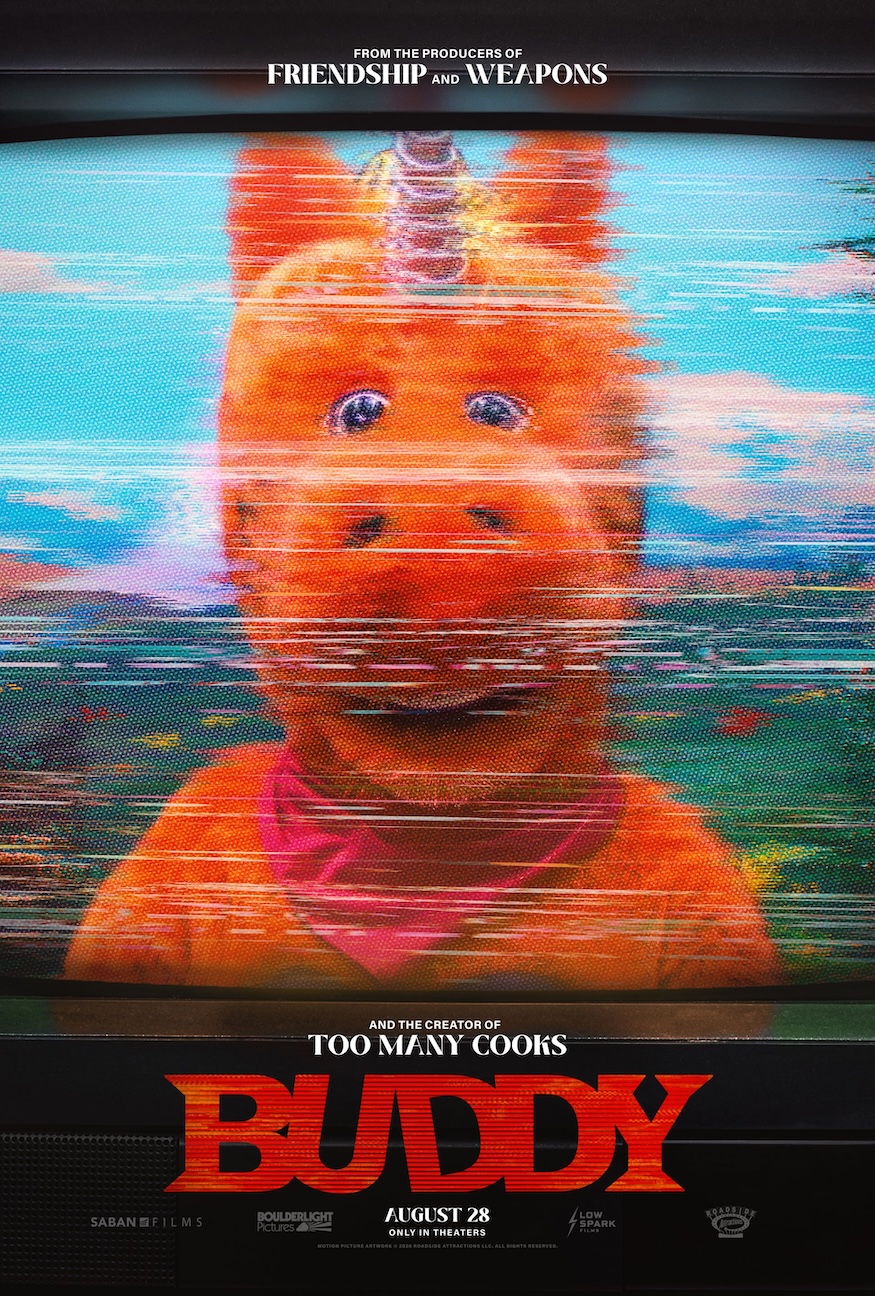
Casper Kelly’s BUDDY, a slasher horror comedy centered on a sinister unicorn mascot, uses its supernatural premise to explore gaslighting and the struggle for personal validation. The film is scheduled to play in theaters on August 28.
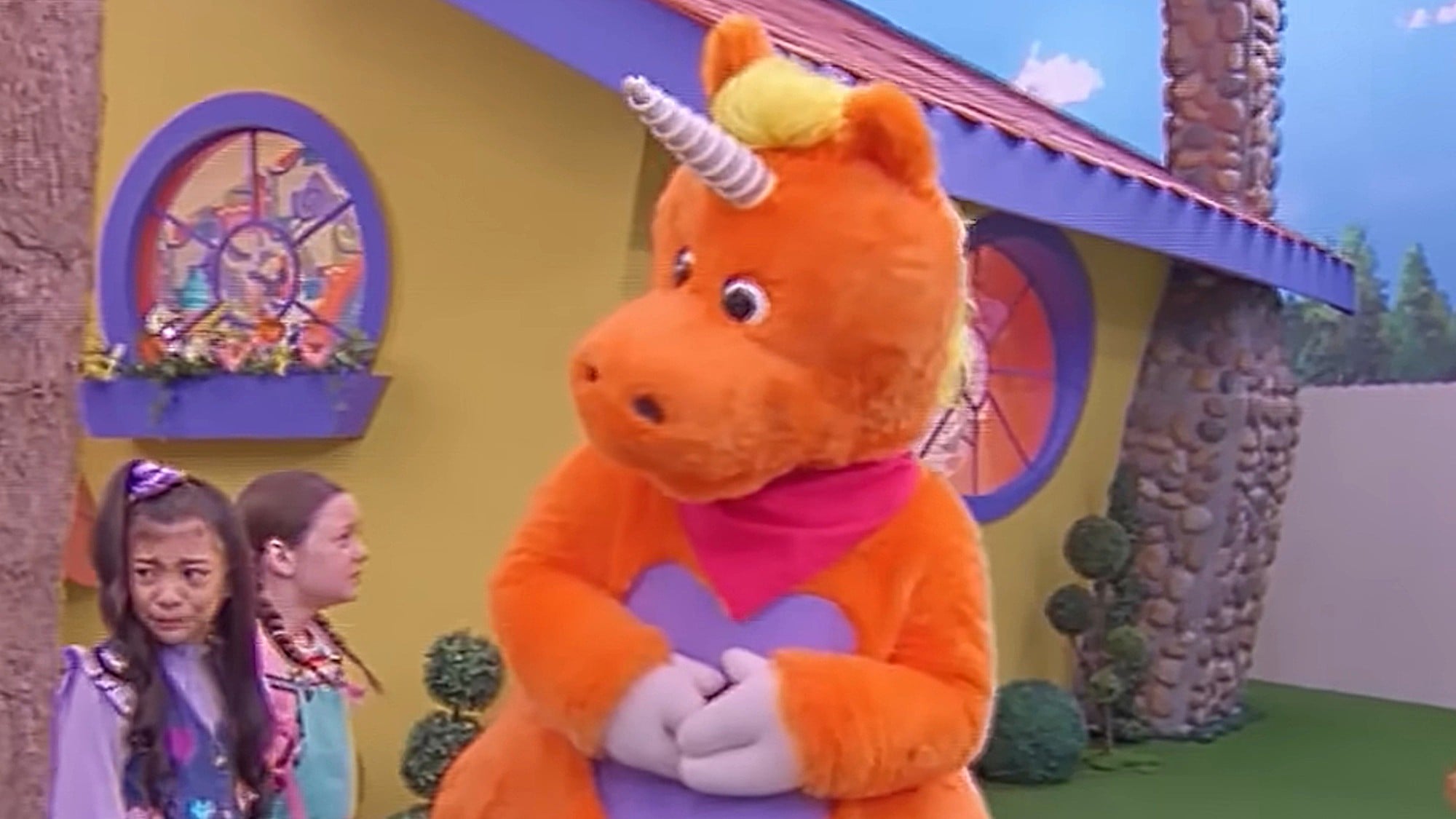
According to FANGORIA, BUDDY begins with segments from a children’s television program presented in a familiar 4:3 format. The show’s cheerful presentation gradually gives way to darker events, including the disappearance of a young performer. Freddy, played by Delaney Quinn, recognizes that something is wrong as the children confront Buddy, who is more than an actor in a costume.
The story also follows Grace, portrayed by Cristin Milioti, a suburban mother raising two boys with her husband, Ben, played by Topher Grace. During dinner, Grace suddenly insists that the family once had a third child—a daughter. Ben dismisses her concerns and questions her mental state rather than accepting what she believes to be true.
The film divides its narrative between Grace’s attempt to prove that her missing daughter existed and Freddy’s journey through the woods with fellow survivors Oliver and Hannah, played by Tristan Borders and Madison Skyy Polan. The children seek safety in a place called Diamond City while Buddy continues to exert control over both children and adults.
FANGORIA’s piece describes Buddy’s realm as a space where adults taken from the real world lose their memories and become compliant performers. Grace is pulled into that world through her television and becomes connected to the horrors already witnessed by Freddy. The analysis interprets this amnesia and enforced obedience as part of the film’s broader treatment of psychological manipulation.
The article argues that BUDDY is less interested in relying on conventional “mother’s love” themes than in showing two women rejecting the effects of gaslighting. Grace’s journey involves more than protecting a child: it also requires her to reclaim confidence in her own memories and experiences after Ben repeatedly tells her she is wrong.
FANGORIA’s discussion includes major plot spoilers, including Grace’s death. After breaking through Buddy’s influence and recognizing Freddy as her daughter, Grace sacrifices herself while fighting to protect the children. Her final moments, the article notes, frame that sacrifice as both an act of maternal protection and a defense of her own truth.